Article
Why Finance and Recruiting always have different headcount numbers
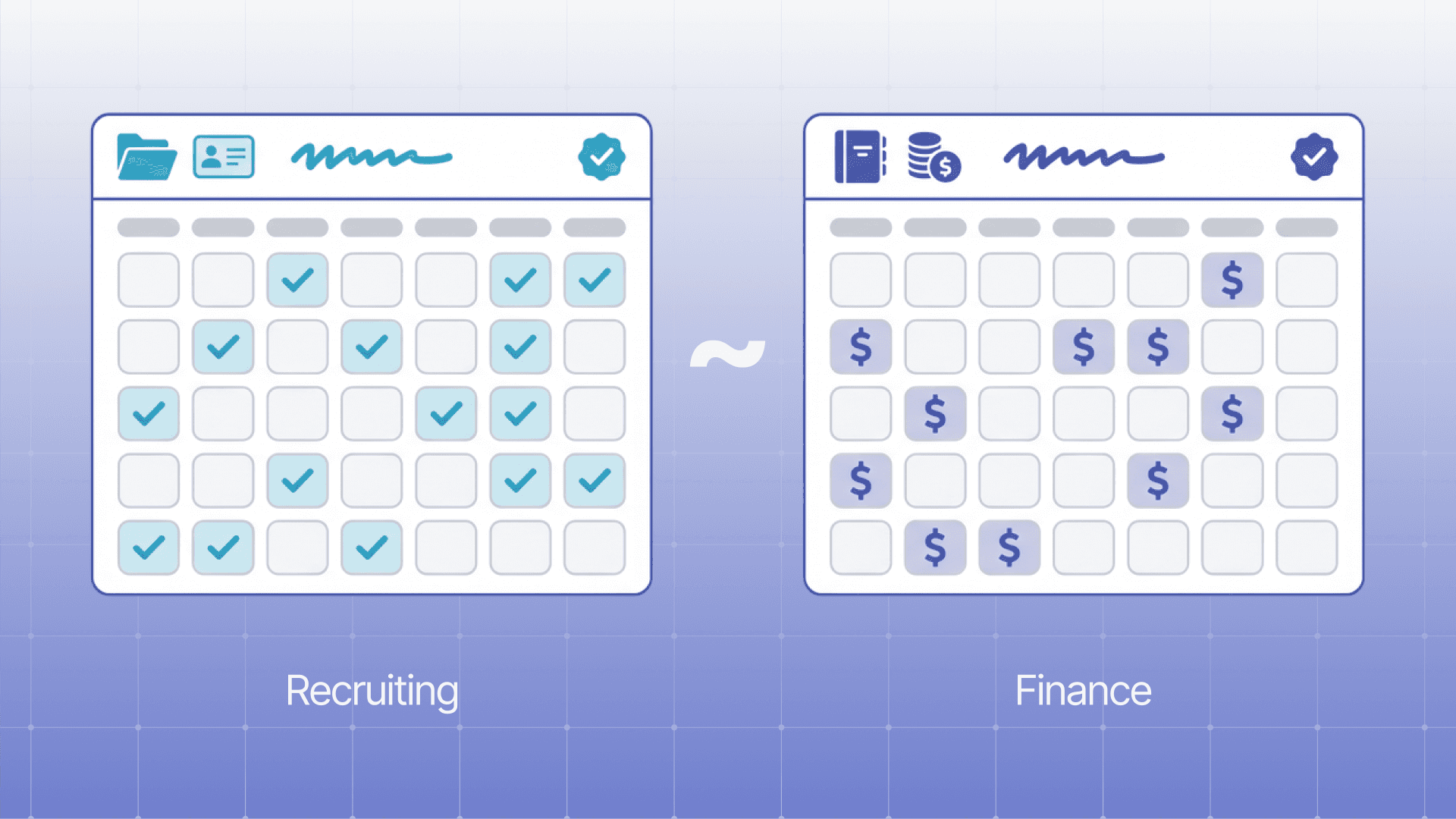
Recruiting hit their target, but finance says we’re behind on hiring. The business doesn’t know who to believe.
TL;DR
At any company hiring at scale, finance and recruiting report different headcount numbers in the same week, and both are technically correct. The divergence comes from three structural fights: offer accepts vs. starts, population definitions, and gross hires vs. net new hires. The problem is not that someone is wrong. The problem is that the business leader in the room thinks both teams are incompetent. A shared system that maps both teams’ definitions to the same underlying data is the only fix that doesn’t require one team to adopt another’s methodology.
The meeting where the numbers don’t match
You’ve been in this room. The cross-functional review where finance says “we’re behind on the 800-head plan” and recruiting says “we’re hitting our hiring targets.” The business leader looks at both teams and thinks: one of you is wrong.
Neither is. They’re answering different questions with different definitions, pulling from different systems, and measuring against different timelines. But the damage is done. It doesn’t matter who’s wrong. You collectively look stupid.
Nearly 60% of HR and finance leaders report friction caused by inconsistent definitions of key metrics. The friction isn’t a people problem or a process problem. It’s a structural one.
Fight 1: Offer accepts vs starts
Recruiting teams focus on offer accepts because that’s what’s in their control. That’s when the candidate accepts the offer, and the ATS (Greenhouse, Ashby, Lever) marks the role as hired. Their time-to-fill calculation ends when the candidate signs.
Finance teams forecast based on the start date, because that’s when payroll cost actually hits. A person with a signed offer who hasn’t hit the payroll is not an employee in finance’s system. Full stop.
The lag between these two events is non-trivial. For ICs, offer-to-start typically runs 2 to 4 weeks. For executives, 4 to 8 weeks. In Europe and Asia, this period can be anywhere from 90 to 180 days.
So when recruiting says “we hired 47 this quarter” and finance says “we added 31 heads,” both are correct.
Fight 2: Population definitions
Arguments over what should be included in the headcount totals are constant. Who counts?
Interns: Hired separately by recruiting, sometimes budgeted separately by finance.
EOR workers: Some companies include EOR workers in corporate headcount; others consider them contractors.
Employees on leave: A person on leave of absence may still require a temporary backfill, meaning the same seat is “filled” to HR, “open” to recruiting, and “budget-neutral” to finance simultaneously.
If the SEC can’t standardize it, your internal teams definitely haven’t.
Fight 3: Gross hires vs net new hires
Three numbers that are all different:
“We hired 100”: gross hires, recruiting’s number based on offer accepts from the ATS. This includes net new, backfills for attrition, and potentially internal transfers.
“We added 50 heads”: finance’s number, sourced from the HRIS to explain the delta in “in seat” headcount from the last quarter.
“We ended at 400”: point-in-time headcount on the last day of the period. A current state snapshot.
At a company hiring 100 people per quarter with 50 departures, recruiting hits the target. Finance shows the team grew by 50. The board sees 400. All three are correct. All three tell a different story. And when one executive hears “100 hires” and another hears “net-added 50,” the conclusion is that someone dropped the ball on 50 people.
The structural fix
None of these definitional choices is wrong. They’re optimized for different questions. Recruiting needs offer-accept to manage the pipeline. Finance needs actual start dates to manage the budget. HR needs the state (active headcount) to manage org structure.
The fix isn’t forcing one team to adopt another’s methodology. It’s a shared system that maps all three teams’ definitions to the same underlying data, so the same question gets the same answer regardless of which team is asking. Three views of one dataset, each with the right permissions.
That’s what we built at Caro. One system. Three views. The same hire tracked from the moment it’s planned, through recruiting, through offer-accept, through onboarding, to the moment the person is in the seat and hitting payroll. Finance sees their number. Recruiting sees theirs. And when the business leader asks, “Are we on track?” there’s one answer, not three.
FAQ
Why can’t we just standardize on one definition of “hire”?
Because each team’s definition serves a real operational purpose. Recruiting needs offer-accept to manage the pipeline. Finance needs to start managing the payroll budget. The problem isn’t the definitions; it’s the lack of a shared layer that translates between them.
How common is this problem?
Universal at companies hiring more than 30 people per month. Nearly 60% of HR and finance leaders report friction from inconsistent metric definitions. RecOps communities have normalized monthly reconciliation calls between recruiting, finance, and HR as standard operating procedure.
Is this just a tooling problem?
No. Workday, Anaplan, Greenhouse, and every other system of record each serve one team’s definition well. The gap is between them. A system that maps data across all three and serves each team their own view is what’s missing.
What does a fix actually look like?
A single data layer that ingests from Workday, your ATS, and your finance system, then serves role-based views to each team. Recruiting sees progress against the approved plan. Finance sees spending against the budget. HR sees the org structure. Same data, different views, one answer.